How Jurisdictional Licensing Variations Influence Jackpot Pool Allocations Across International Mobile Slot Networks
Devon Schröder · Aug 24, 2026
How Jurisdictional Licensing Variations Influence Jackpot Pool Allocations Across International Mobile Slot Networks
Licensing Frameworks Shape Global Pool Structures
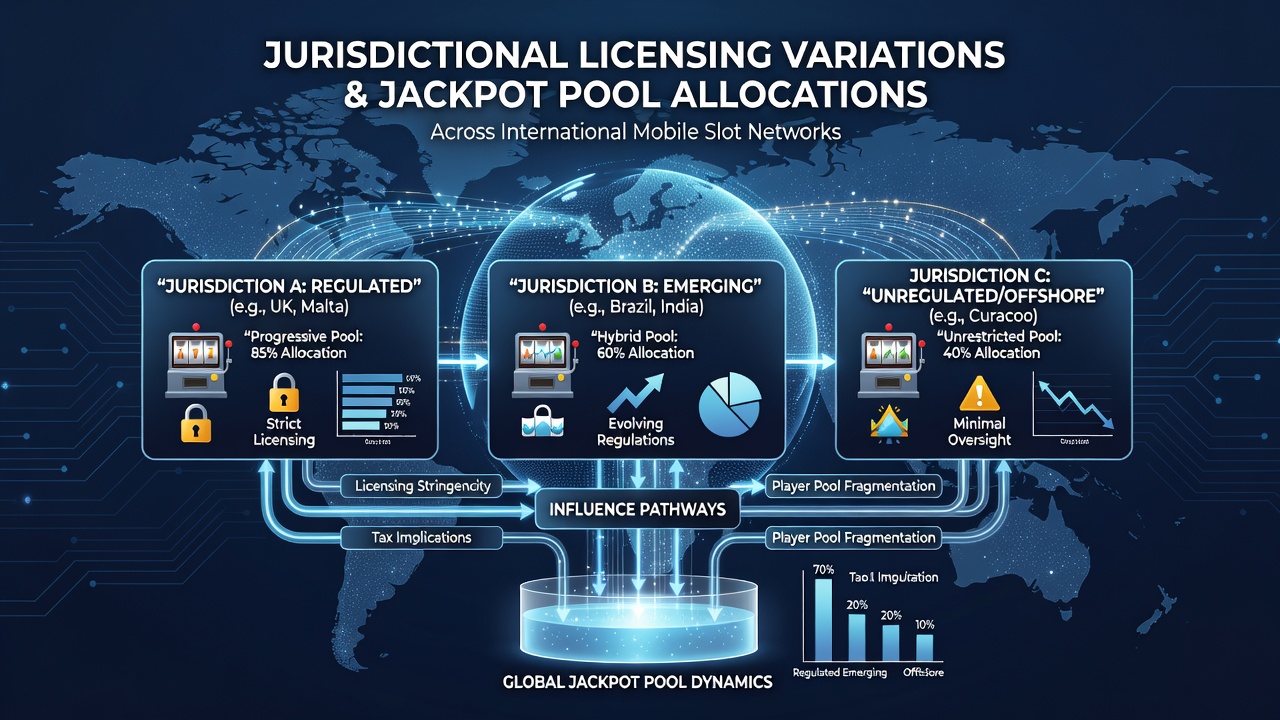
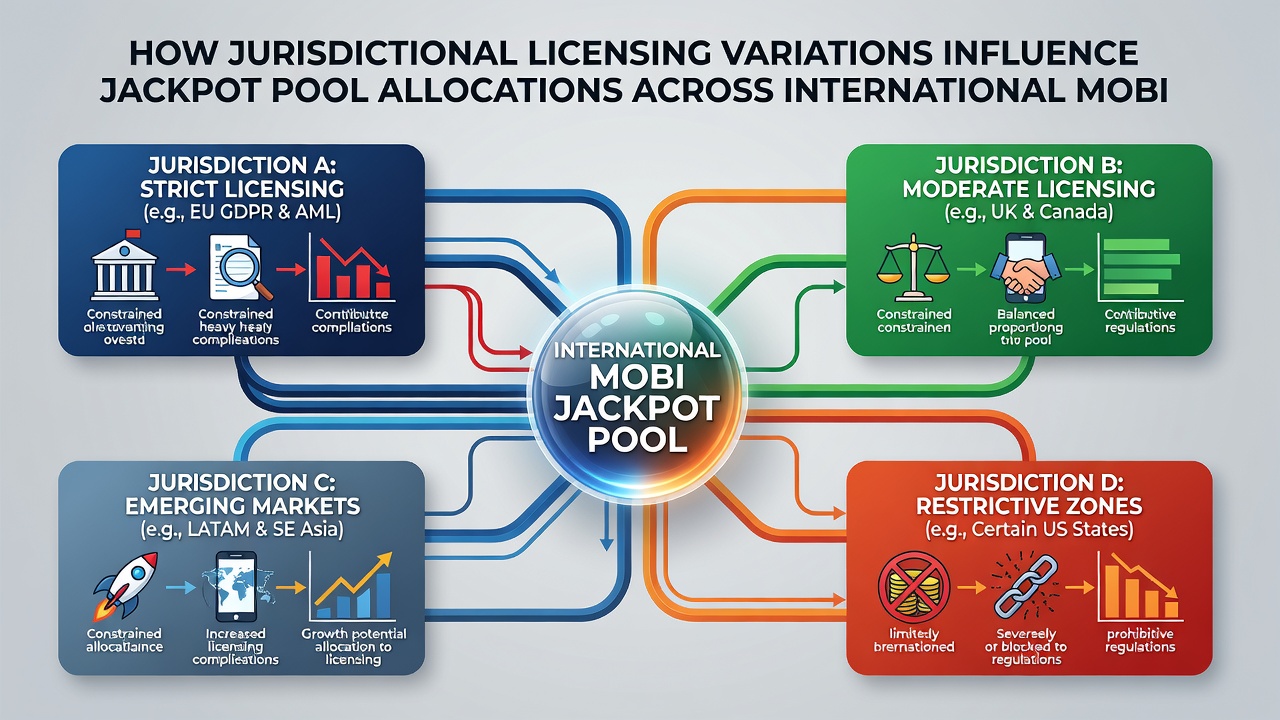
Regulatory bodies in different regions set distinct requirements for how operators contribute to shared jackpot pools, and these rules directly determine contribution percentages from mobile slot wagers. Operators licensed in multiple jurisdictions must segment their player bases and allocate portions of each bet according to the strictest local mandates while still feeding into centralized progressive systems that span borders.
Data from regulatory filings in August 2026 shows that variations in minimum contribution rates range from 1 percent in certain North American markets to over 3 percent in parts of Asia, which forces network administrators to recalibrate pool formulas on a per-region basis to maintain compliance across all participating licenses.
Contribution Mechanics and Cross-Border Compliance
Mobile slot networks rely on geolocation technology and player verification systems to route each wager through the correct licensing lens before any jackpot contribution is calculated, and this process creates layered allocation tables that differ by license type. A single progressive jackpot may draw from players under Nevada rules, Australian state licenses, and European Union member state permits simultaneously, yet each segment applies its own withholding percentages before funds reach the common pool.
Those who manage these networks report that reconciliation happens daily through automated systems that separate contributions by originating jurisdiction, and discrepancies in tax treatment or reserve requirements often lead to temporary holds on portions of the pool until regulatory audits clear the allocations.
Regional Examples in Practice
Take the case of operators connecting to networks that span the United States and Canada, where state and provincial licensing boards impose different reserve thresholds that affect how quickly pools grow and when they can be awarded. In one documented configuration, contributions from Ontario-licensed mobile sessions flow into a pool that must maintain a higher liquidity buffer than the portion originating from New Jersey, resulting in staggered payout triggers that depend on the geographic mix of active players at any given moment.
Similar patterns appear in Asian markets where operators licensed under different national frameworks adjust their mobile slot contributions to align with local anti-money laundering rules and capital reserve mandates, and these adjustments ripple through the shared network to influence overall growth rates for international participants.
Technical Infrastructure Supporting Varied Allocations
Backend systems use modular contribution engines that tag each transaction with its licensing origin, allowing the network to apply jurisdiction-specific multipliers and caps without disrupting the unified jackpot display seen by players. These engines update in real time as new licenses are added or existing ones face revised rules, and August 2026 updates from multiple regulators prompted several networks to recalibrate their allocation tables mid-month.
Encryption standards and audit trails ensure that every contribution path remains traceable back to its licensing authority, which satisfies simultaneous oversight from bodies such as the Pennsylvania Gaming Control Board and the Canadian Gaming Association reporting requirements. Observers note that this traceability reduces disputes during cross-jurisdictional audits but adds processing overhead that operators must absorb within their operational budgets.
Impact on Player Experience and Network Growth
Players accessing the same mobile slot title from different jurisdictions may encounter identical jackpot meters yet experience different effective contribution rates that influence how rapidly those meters climb during peak hours. Network operators balance these differences by publishing aggregated growth statistics that mask individual jurisdictional splits, and this approach keeps the player interface uniform while satisfying each license holder's disclosure obligations.
Research from industry reports indicates that networks incorporating more than five distinct licensing regimes see slower average pool growth compared with those limited to two or three, primarily because the administrative overhead of compliance diverts resources that could otherwise support marketing or feature development.
Conclusion
Jurisdictional licensing variations continue to dictate the precise mechanics of jackpot pool allocations in international mobile slot networks, with each new regulatory update requiring corresponding adjustments to contribution formulas and reconciliation processes. Operators that maintain active licenses across multiple regions invest in flexible technical infrastructure to handle these differences while preserving a seamless experience for end users. As licensing landscapes evolve, the core challenge remains aligning diverse compliance demands with the operational reality of shared progressive systems that operate around the clock.